



Published in THE HINDU,GARDENING,Sunday, September 21, 1997
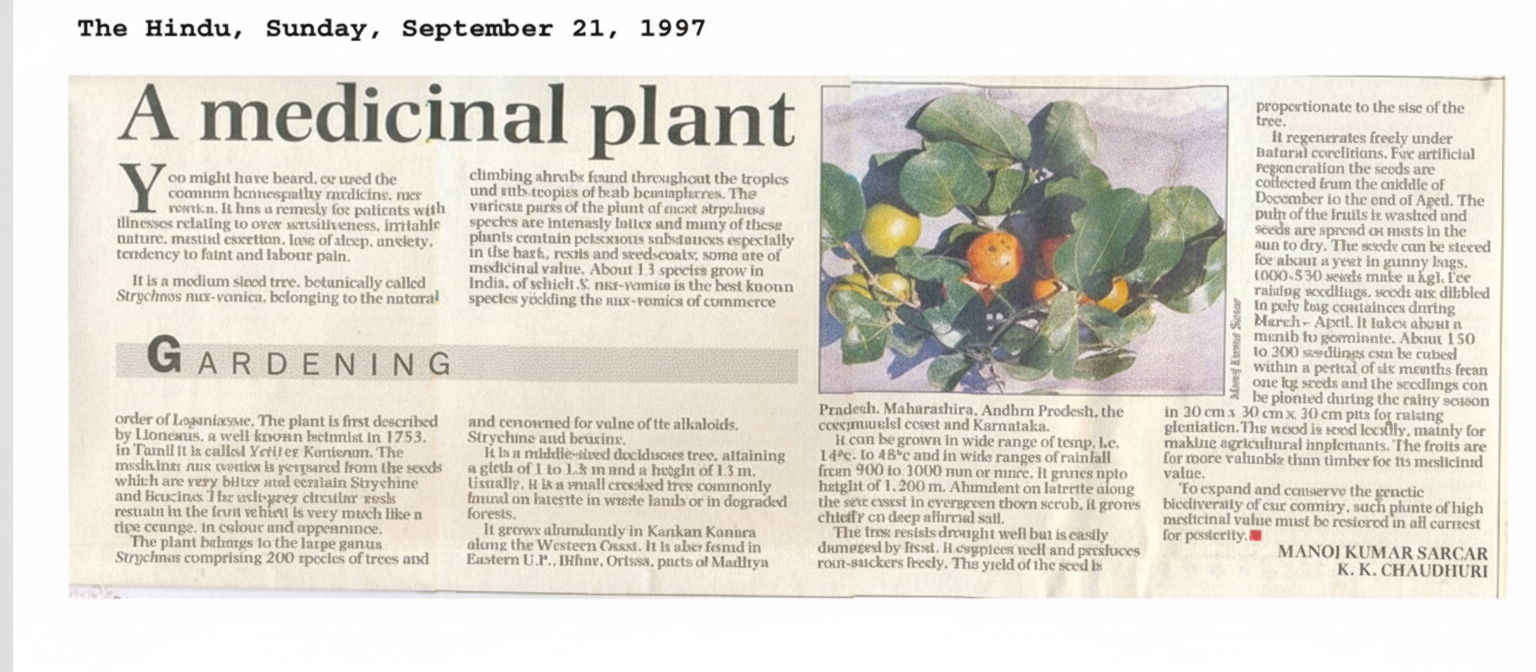
You might have heard, or used the common homeopathy medicine, nux vomica. It has a remedy for patients with illnesses relating to over sensitiveness, irritable nature, mental exertion, loss of sleep, anxiety, tendency to faint and labor pain.
It is a medium sized tree, botanically called Strychnos nux-vomica, belonging to the natural order of Loganiaceae. The plant is first described by Linneaus, a well-known botanist in 1753. In Tamil it is called Yetti or Kanjaram. The medicine, nux vomica is prepared from the seeds which are very bitter and contain Strychine and Brucine. The ash-grey circular seeds remain in the fruit which is very much like a ripe orange, in colour and appearance.
The plant belongs to the large genus Strychnos comprising 200 species, of trees and climbing shrubs found throughout the tropics and sub-tropics of both hemispheres. The various parts of the plant of most Strychnos species are intensely bitter and many of these plants contain poisonous substances especially in the bark, roots and seed-coats; some are of medicinal value. About 13 species grow in India. of which S. nux-vomica is the best known it species yielding the nux-vomica of commerce and renowned for value of its alkaloids, Strychnine and Brucine.
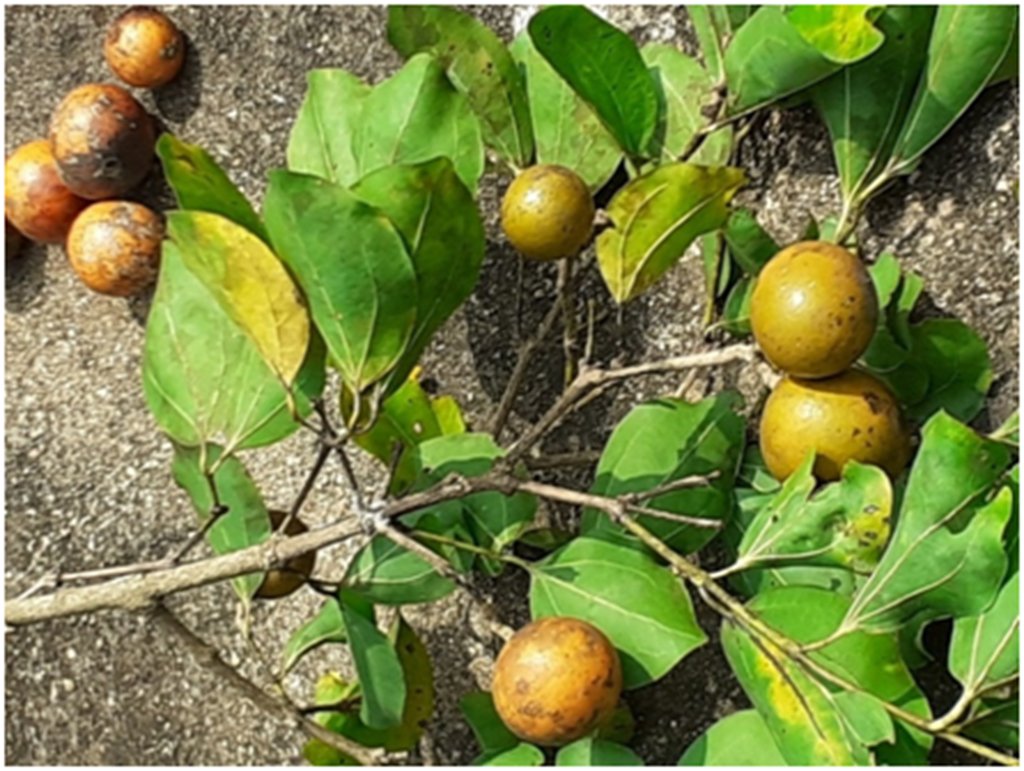
It is a middle-sized deciduous tree, attaining a girth of 1 to 1.8 m and a height of 13 m. usually, it is a small crooked tree commonly found on laterite in waste lands or in degraded forests.
It grows abundantly in Kankan Kanara along the Western coast. It is also found in Eastern U.P, Bihar, Orissa, parts of Madhya Pradesh, Maharashtra, Andhra Pradesh, the Coromandel Coast and Karnataka.
It can be grown in wide range of temp i.e. 14°c to 48°c and in wide ranges of rainfall from 900 to 3000mm or more. It grows up to height of 1,200 m. Abundant on laterite along the sea-coast in evergreen thorn scrub, it grows chiefly on deep alluvial soil.
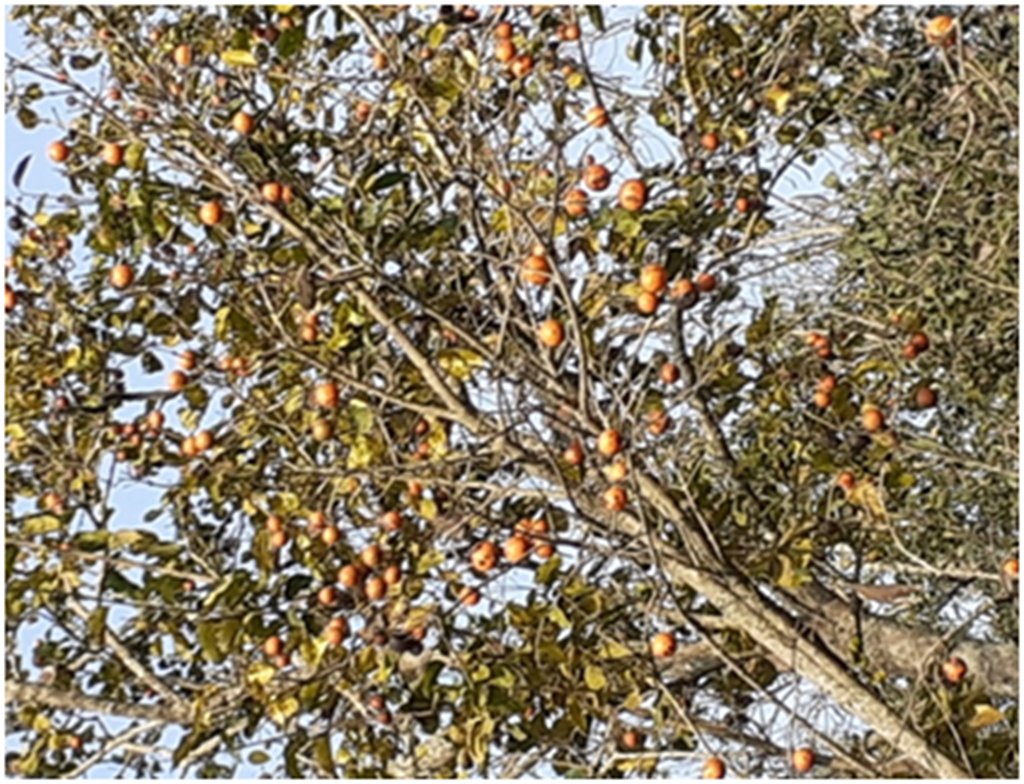
It regenerates freely under natural conditions. For artificial regeneration the seeds are
collected from the middle of December to the end of April. The pulp of the fruits is washed and seeds are spread on mats in the sun to dry. The seeds can be stored for about a year in gunny bags (600-850 seeds make a kg). For raising seedlings, seeds are dibbled
in poly bag containers during March — April. It takes about a month to germinate. About 150
to 200 seedlings can be raised within a period of six months from one kg seeds and the seedlings can be planted during the rainy season in 30 cm x 30cm x 30cm pits for raising plantation. The wood is used locally, mainly for making agricultural implements. The fruits are more valuable than timber for its medicinal value.
To expand and conserve the genetic biodiversity of our country, such plants of high medicinal value must be restored in all earnest for posterity.