



During 1970s and 80s forestry got special emphasis on Wildlife and Forest protection by commissioning Wildlife (Protection) Act, 1972 and the Forest (Conservation) Act, 1980. Social forestry becomes the mainstay of all activities. In later part of 1980, Government of India circulated the Guidelines for passing JFM resolution to all State Governments.
During 1980s and 90s, the concept of biodiversity and the management of natural resource of forest was considered as a global phenomenon. The trade in MPs has increased 100% from 1991-97, i.e. since globalization. But this trade is completely controlled by the informal sector. The custodian has no material stake in the trade, either in terms of revenue, or even in terms of surveillance.
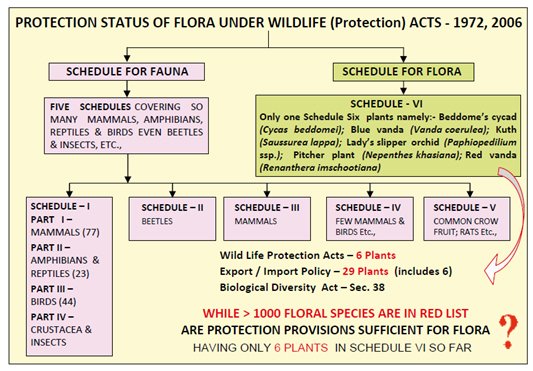
During last 13 years, i.e. 1997-2010, Wildlife (Protection) Act 1972 was amended as Wildlife protection Amendment Act 2006 and Biological Diversity Act,2002 but failed to extend the list of threatened plants in the schedule. It is a matter of concern that when more than 1200 floral species suffer from various degrees of threats in the country and when the plants of medicinal value received spurt in global trade since 1991, there is no policy formulation /Reformation to this sector of the forestry operations which needs immediate attention. Therefore, a paradigm shift in management strategy of MP species is needed with immediate effect by the custodian by changing its priority in formulating policy, legal provisions and easy enforcement mechanism. This then needs to be legislated as in the case of fauna species.
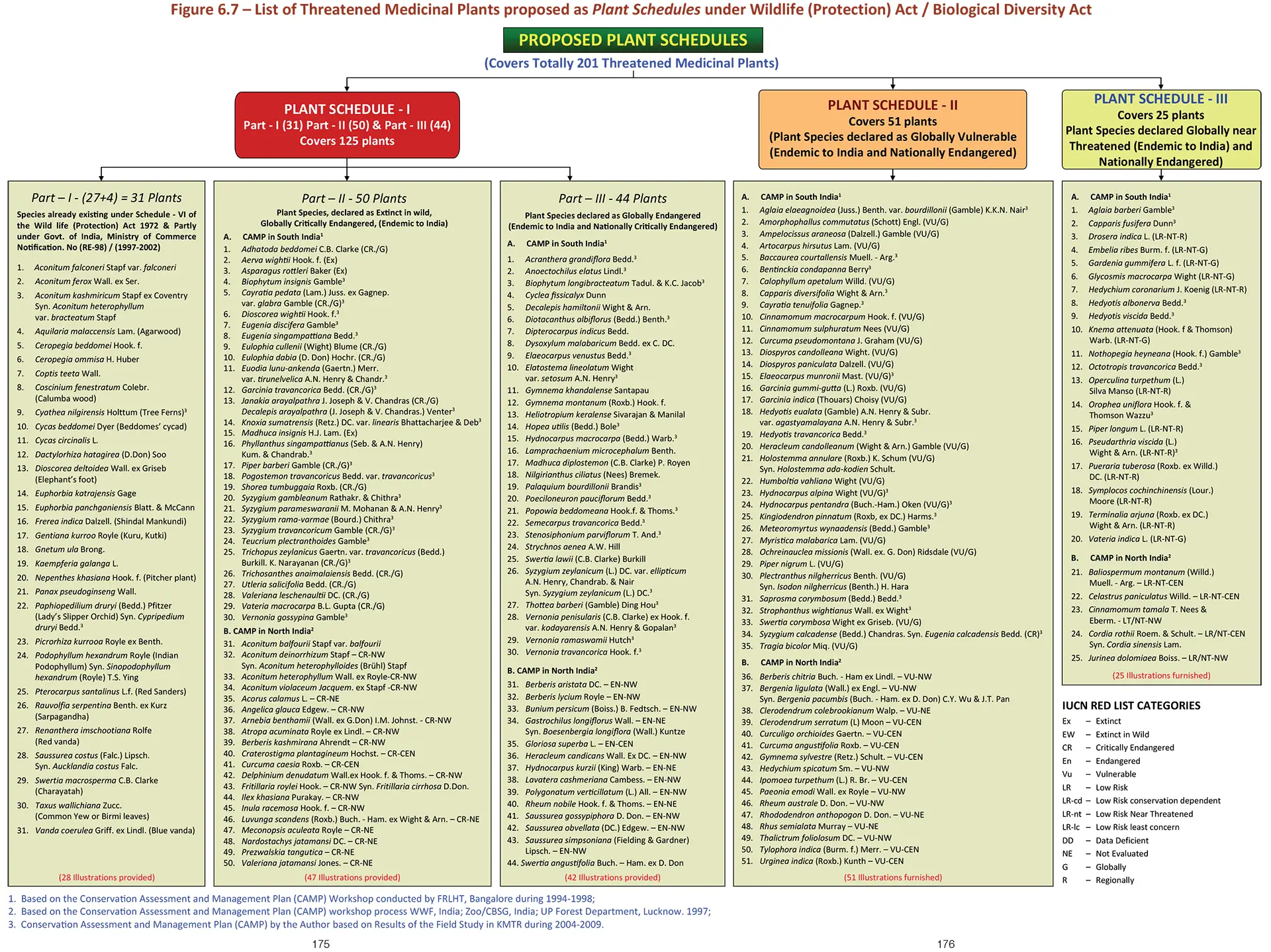
Presently it is suggested that 201 TMPs be covered under three Plant Schedules(Sarkar, 2010) as shown in Figure – 6.7. in the above-mentioned book published by the National Biodiversity Authority, Govt of India, 2012 as follows:
It was expected that a number of threatened categories of plants would be added to the schedule in the Wildlife (Protection) Act, 1972. However, we have failed to extend the list of threatened plants in the schedule. Separate schedules need to be created for the imperilled plants in either the Wildlife (Protection) Act or the Biological Diversity Act, based on the list of plants already available in Schedule VI of the WPA, the Ministry of Commerce list of notified plants, 1997 IUCN Red list of Threatened Plants and the Conservation Assessment and Management Plan (CAMP) lists of TMPs in southern and northern India. This then needs to be legislated as in the case of fauna species. Presently it is suggested that 201 TMPs be covered under three separate Plant Schedules (Sarkar, 2010) as shown in Figure – 6.7.
The order of Plant Scheduling may be in following way. Mere name of Schedule for flora under Wildlife Protection Acts may mix up the issue with the existing schedule of fauna. Therefore, it is suggested that scheduling for plants may be specifically called as Plant Schedule I, Plant Schedule II, Plant Schedule III.
From the various sources as mentioned above at present totally 201 Threatened MPs may be covered under 3 Plant schedules in the following ways; under Plant Schedule I, it can be given importance as Part I, Part II & Part III for following group of threatened Plants (Vide Figure – 6.7).
(It covers 31 plants under Part I, 50 Plants under Part II and 44 plants under Part III).
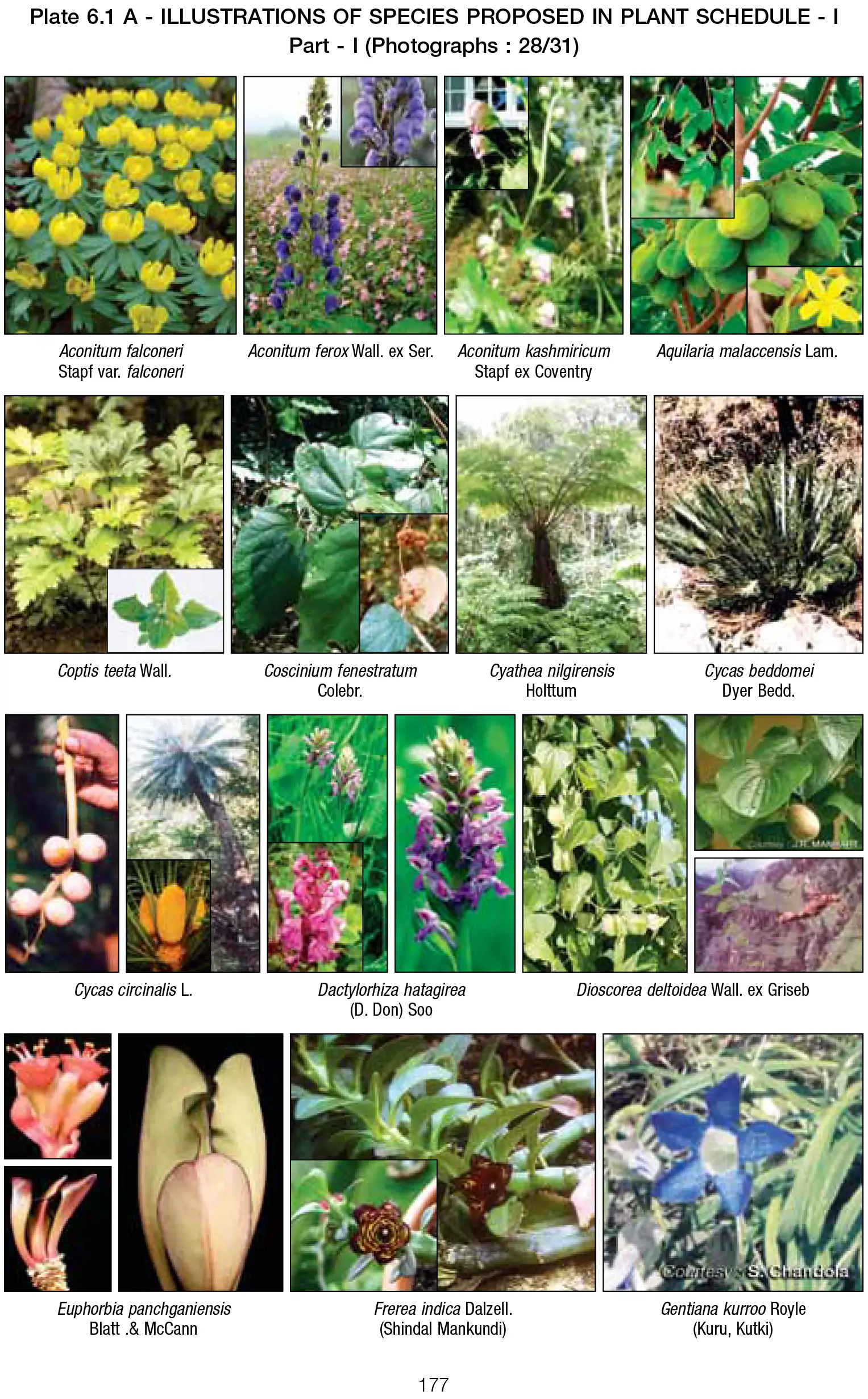
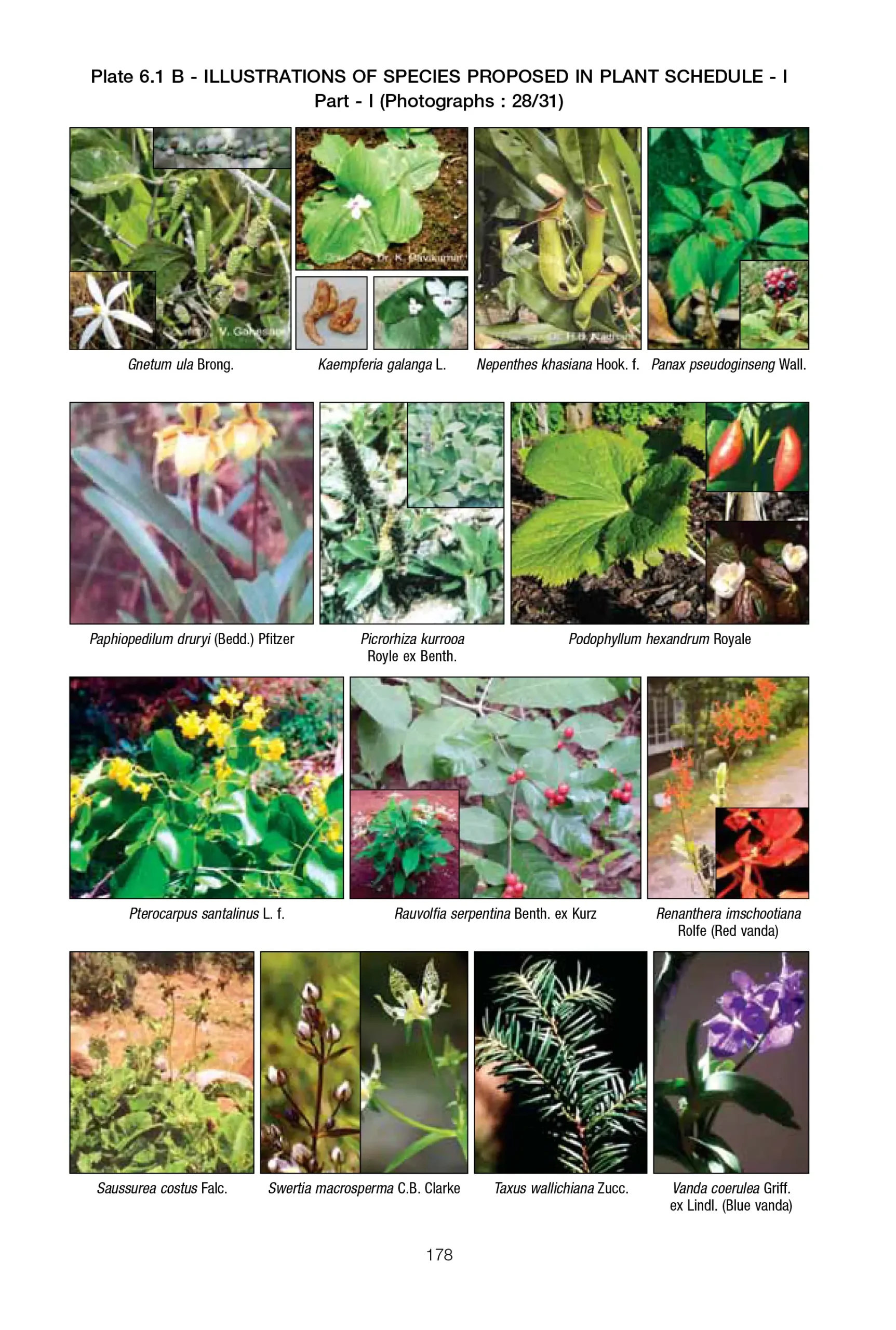
Part – I: 31 Plant Species already existing under Schedule – I of the Wildlife (Protection) Act 1972 and partly under government of India, Ministry of Commerce Notification. No. (RE – 98)/ (1997 – 2002). (Plate – 6.1 A & B)
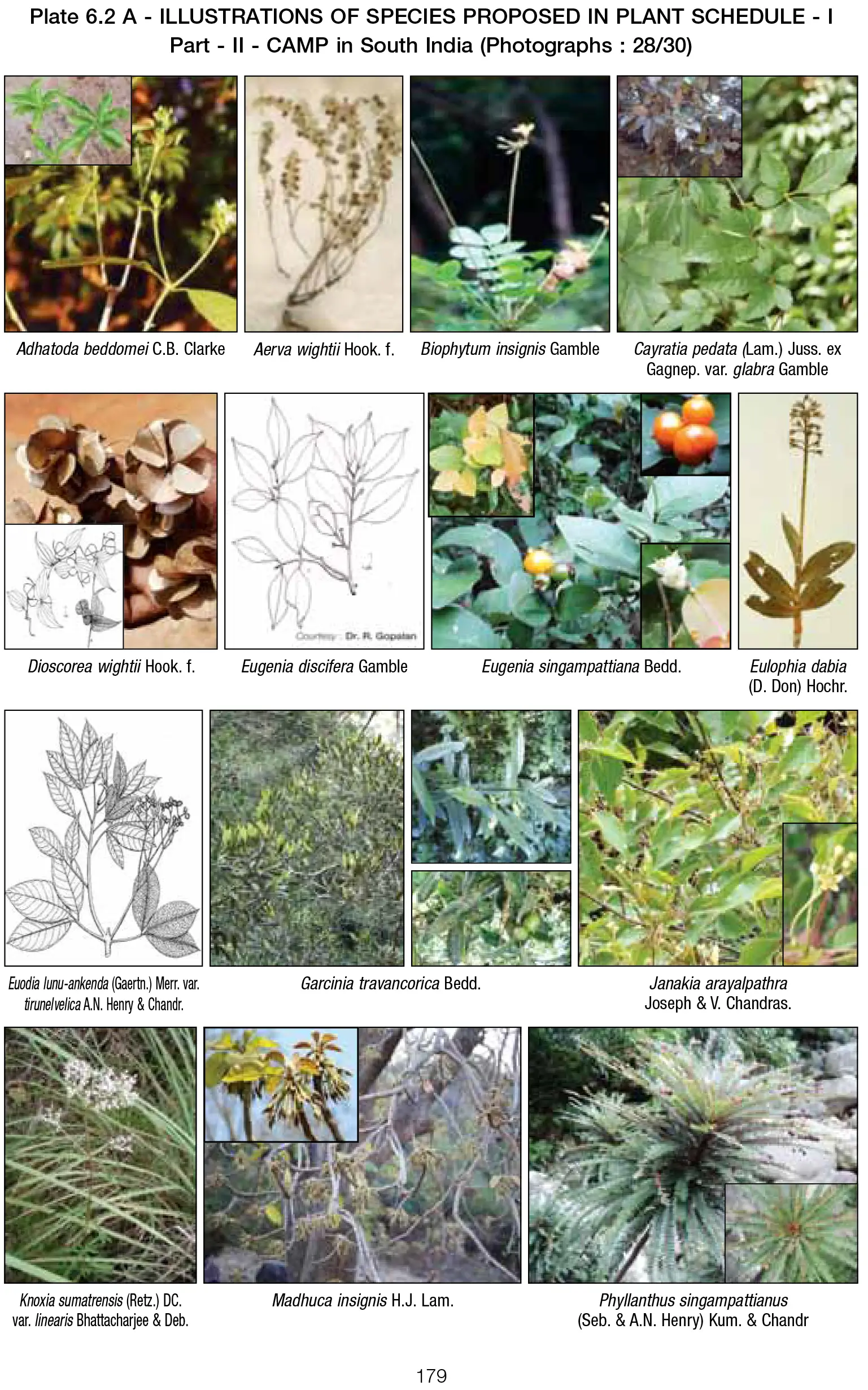
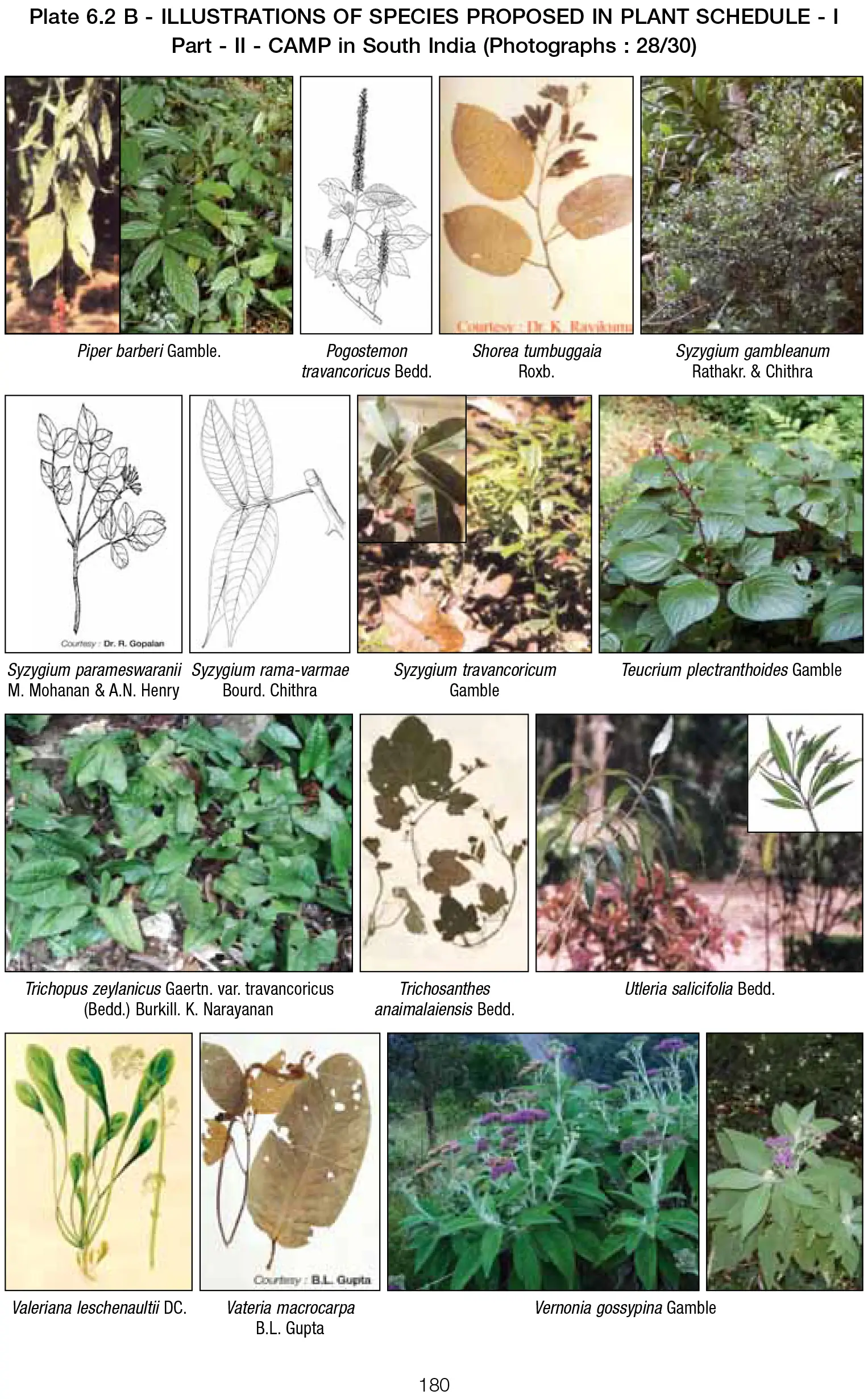
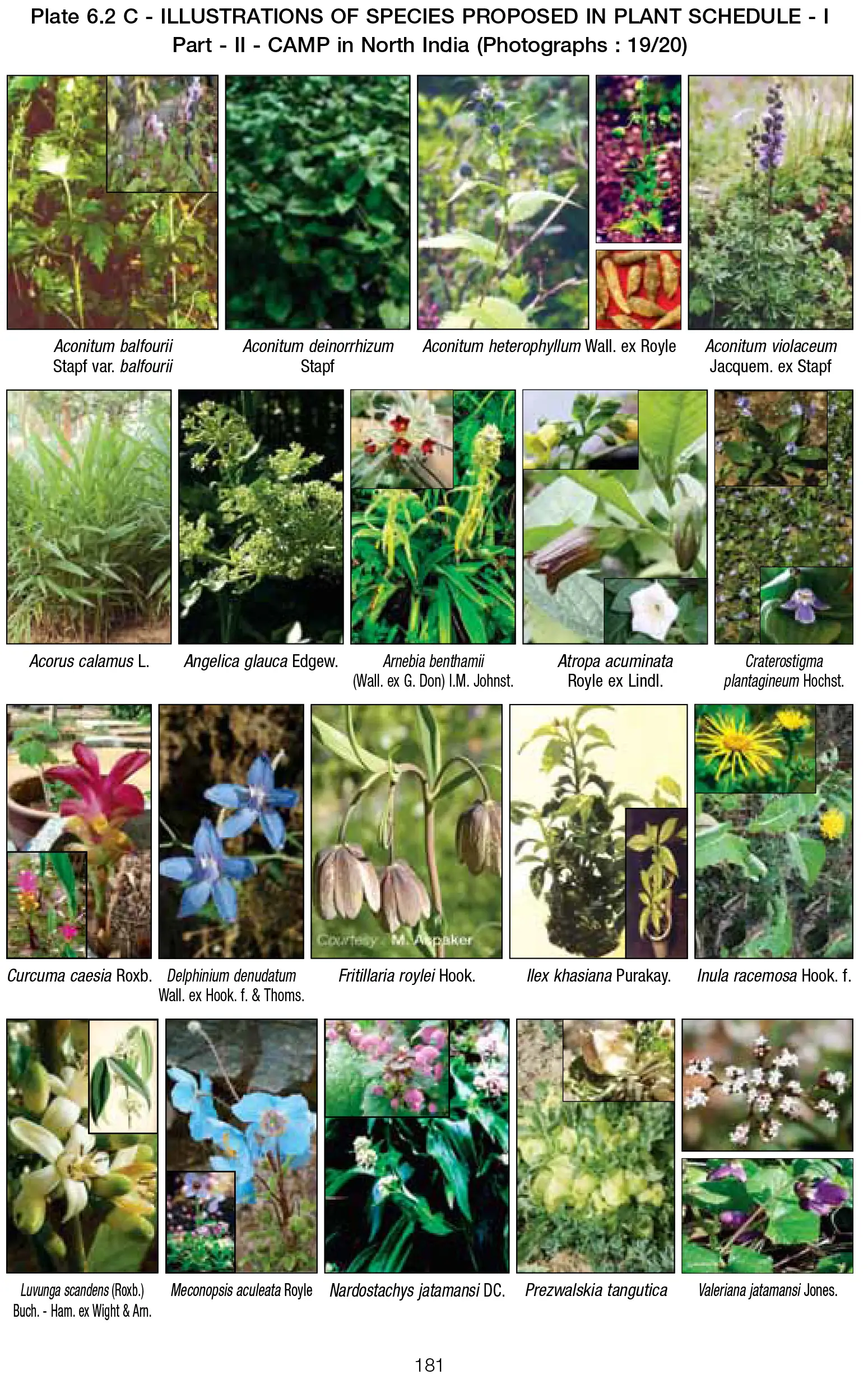
Part – II: 50 Plant Species, declared as Extinct in wild, Globally Critically Endangered, (Endemic to India). (Plate – 6.2 A, B & C).
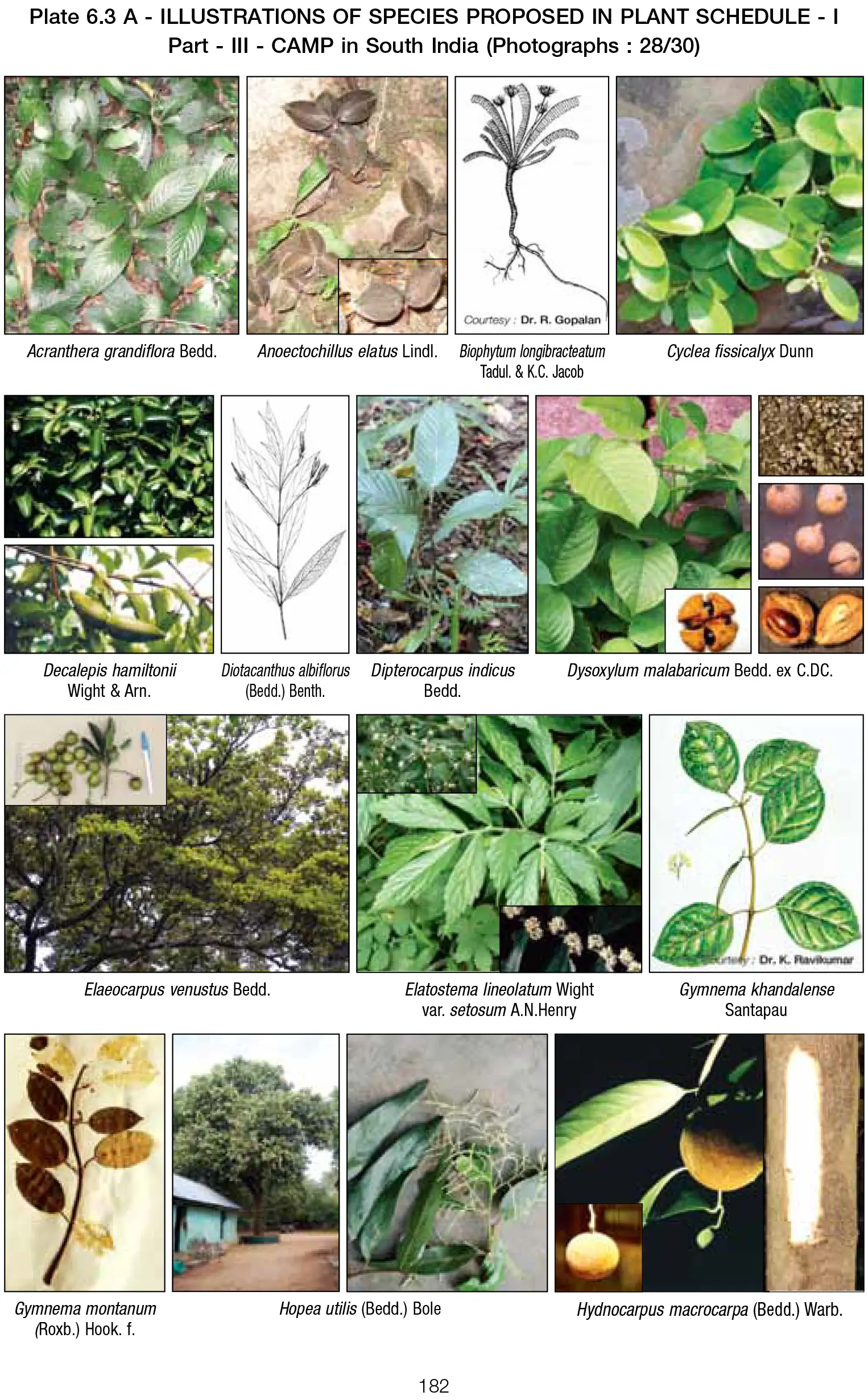
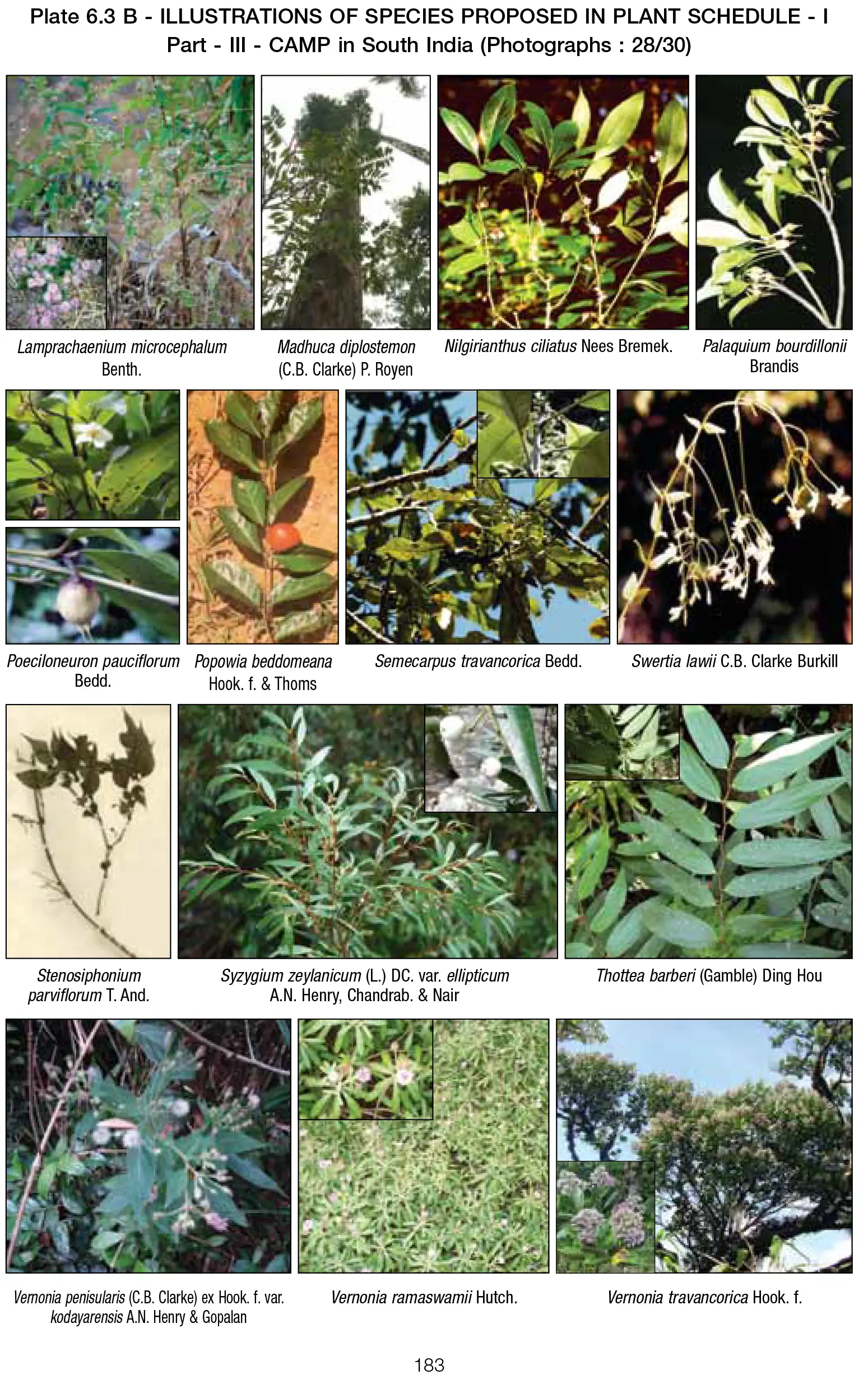
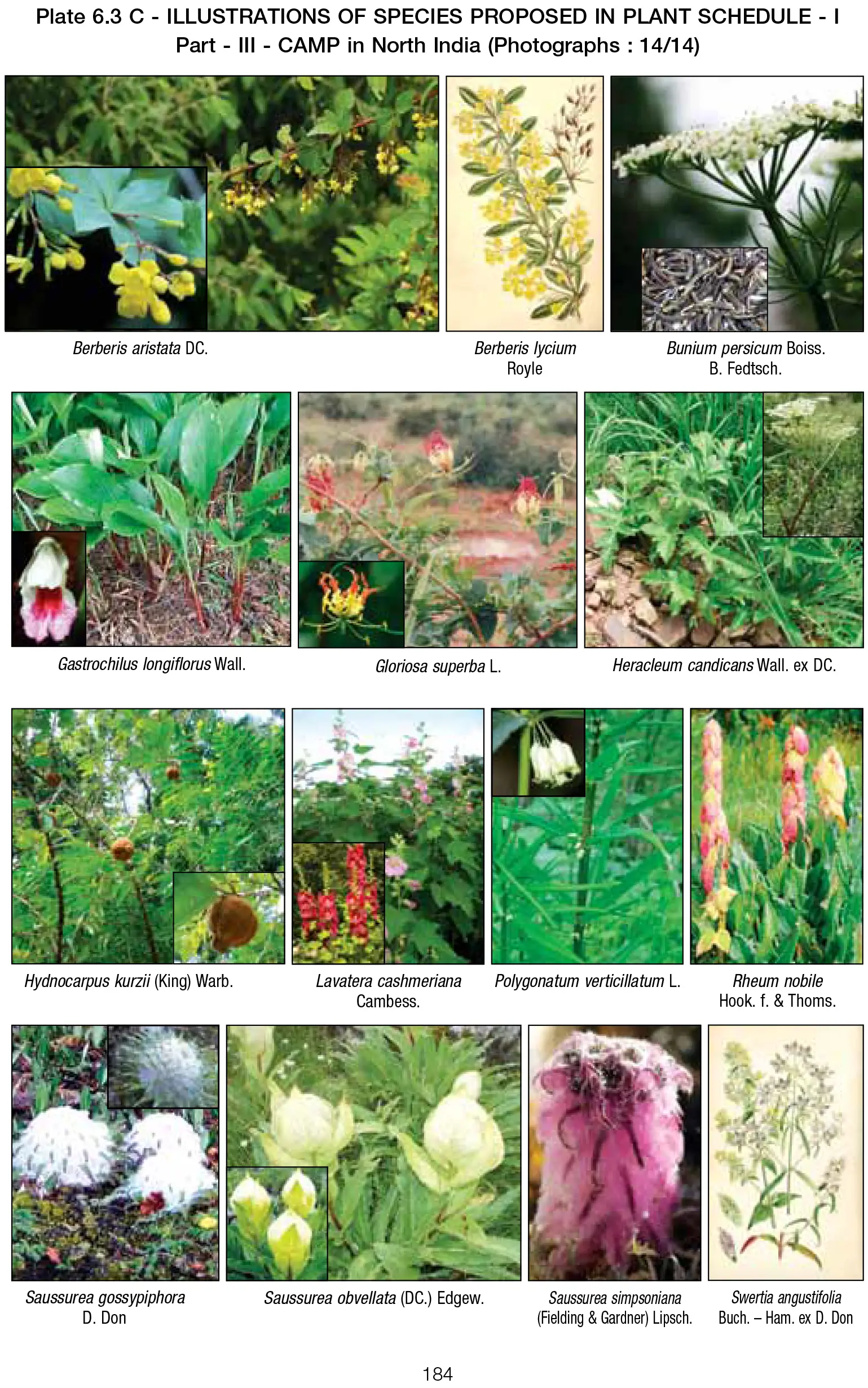
Part – III: 44 Plant Species declared as Globally Endangered (Endemic to India and Nationally Critically Endangered). (Plate – 6.3 A, B & C).
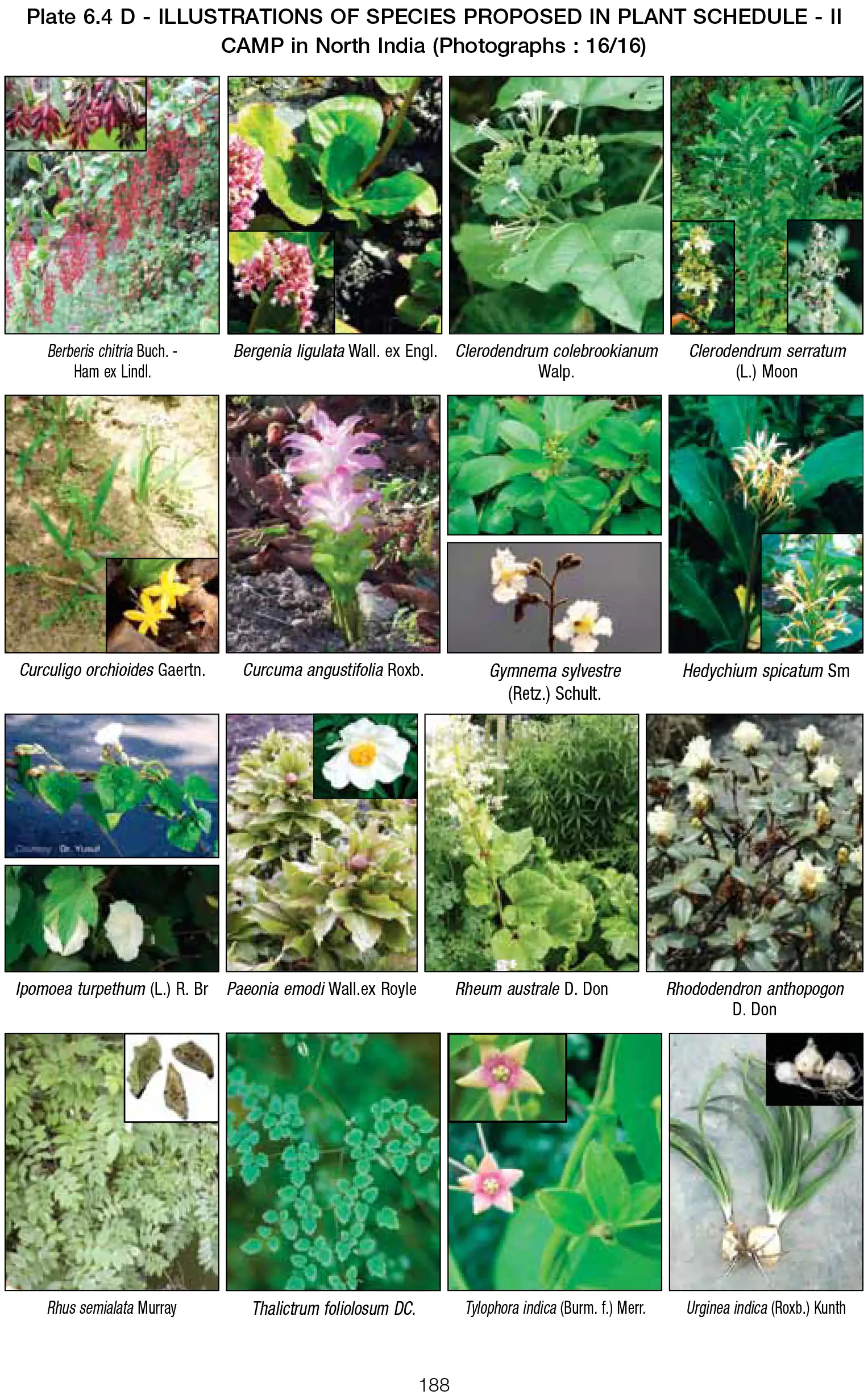
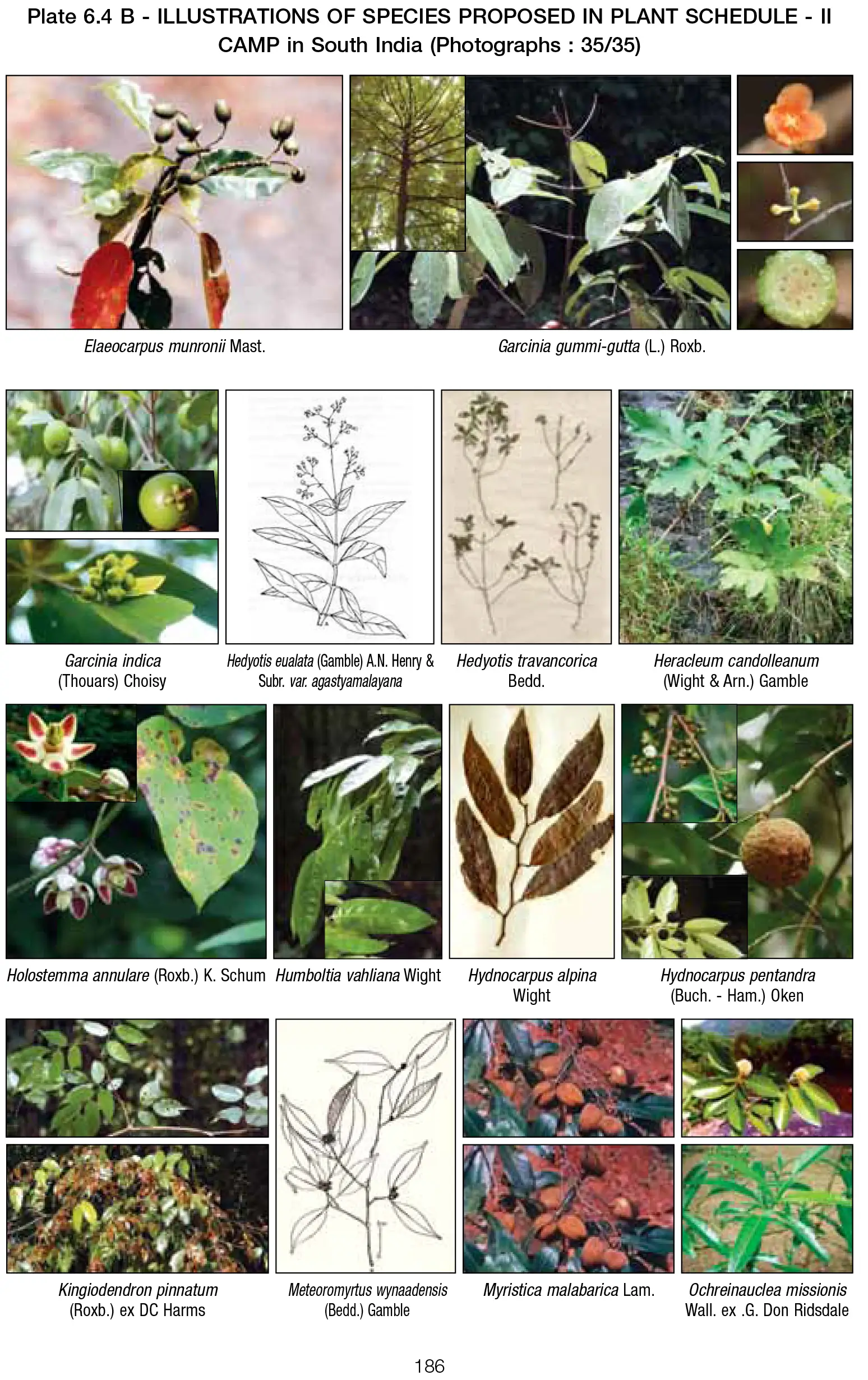
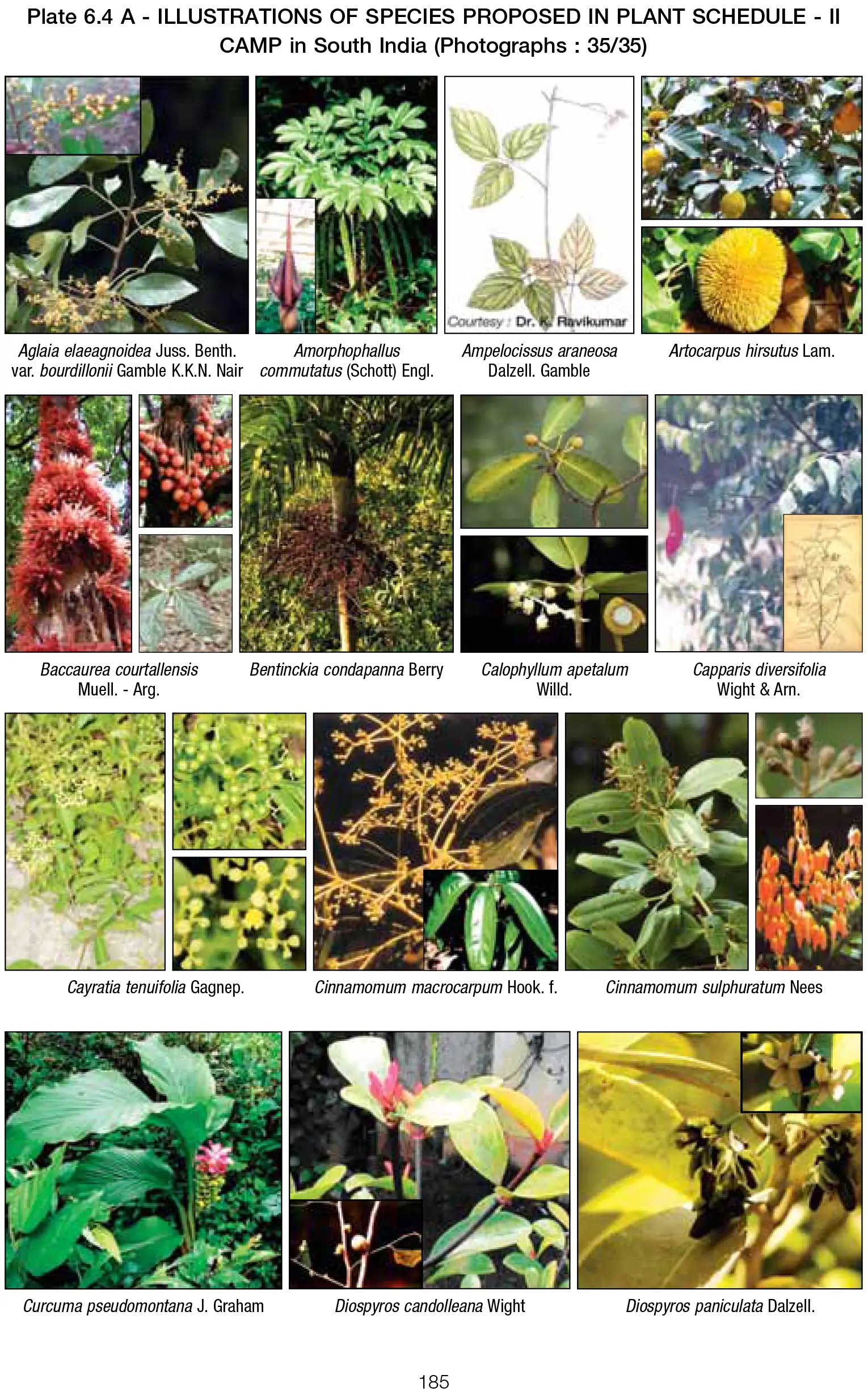
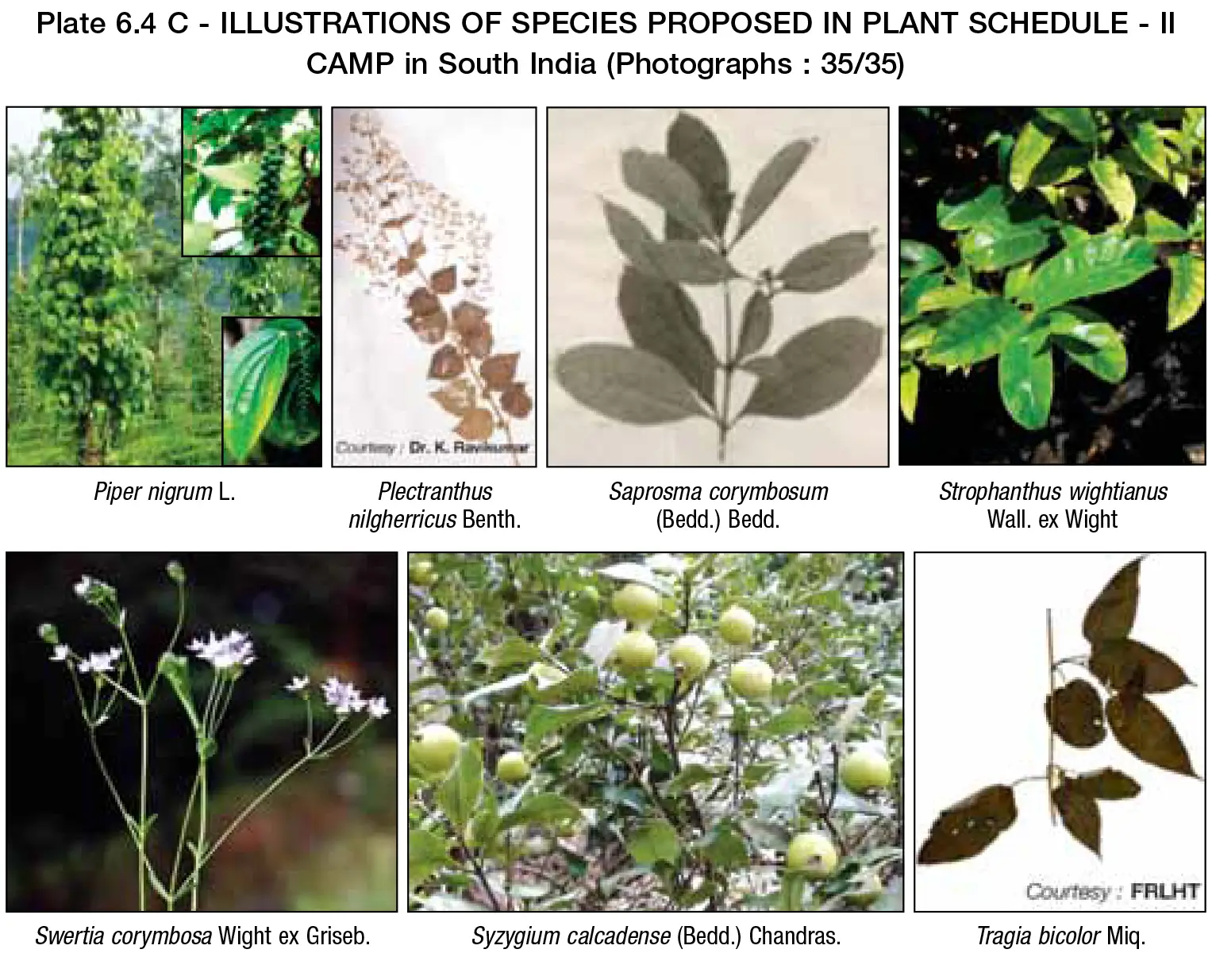
(Plant Species declared as Globally Vulnerable (Endemic to India and Nationally Endangered). (Plate -6.4 A, B, C & D).
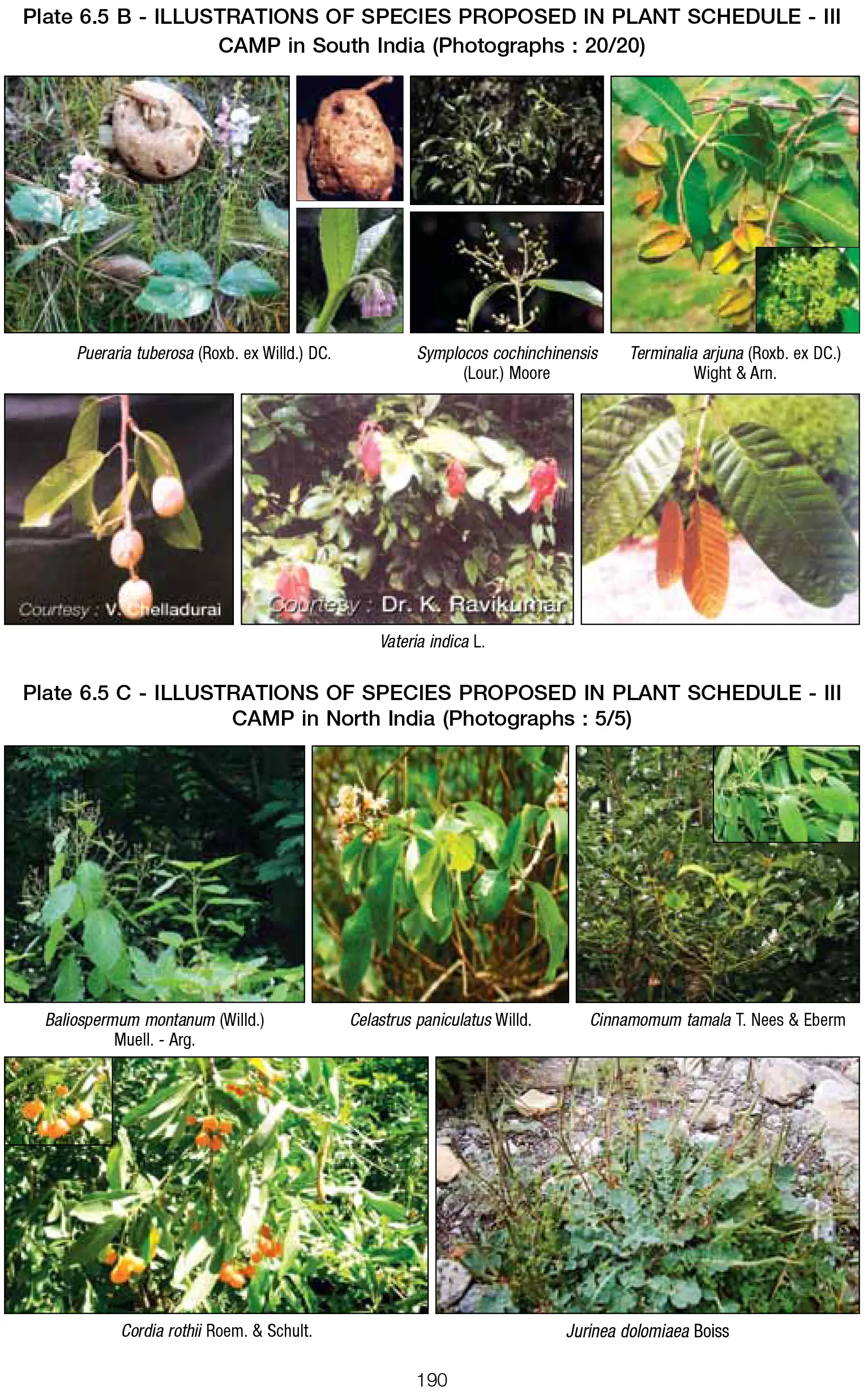
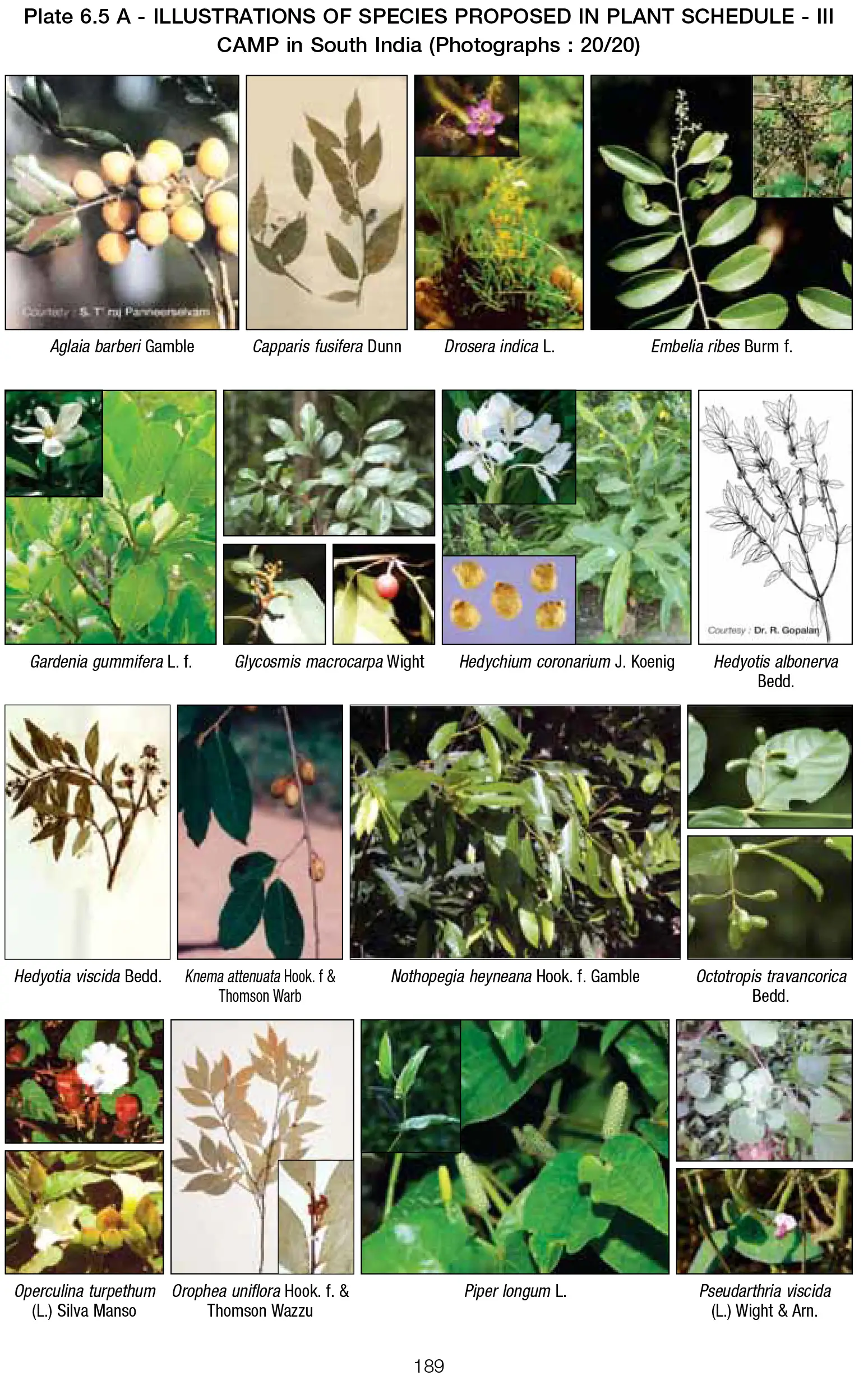
Plant Species declared Globally near Threatened (Endemic to India) and Nationally Endangered). (Plate – 6.5 A, B & C).

Dr Sarkar did his graduation and post-graduation from the Presidency College of Calcutta University; M.Sc. in Forestry from Indira Gandhi National Forest Academy (IGNFA), Dehra Dun and MBA/PGPPM (Post Graduate in Public Policy Management) from Indian Institute of Management, Bangalore. He was conferred a doctorate degree in Botany from Bharathidasan University, Tiruchirappalli, Tamil Nadu. Read More…
Copyrights © 2026. BioGove. All Rights Reserved.
Proudly Powered by Techcmantix Technologies